
Understanding Abstract Art Styles and Their Origins
Abstract art. Enigma? Or just a glorified mess? Let’s dive right in. We’re talking about a world where colors don’t behave, lines refuse to conform, and shapes reject definition—kind of like your rebellious teenager’s new hairstyle. And yet, it’s more than just chaos.
The Birth of Abstract Art: A Haphazard Beginnings
Picture this: It’s the early 20th century, an era of revolutions and revolts. Artists got tired of just painting fruit bowls and portraiture. They thought, “Why not redefine what art can be?” Suddenly, Kandinsky comes along with his swirls and blobs. Did he see the world differently, or was he merely being dramatic? Hard to say.
- Wassily Kandinsky: Often credited with creating the first true abstract work.
- Year: 1910
- Piece: Untitled (First Abstract Watercolor)
But beware. Not everyone welcomed this newfangled ‘art’—some critics peered at Kandinsky’s work and saw nothing more than a curious toddler’s enthusiastic doodles. Yet, others gazed deeply and declared it profound. See, perception is a fickle beast.
Cubism: The Geometry Lesson You Didn’t Ask For
No straight paths here! Cubism, birthed by the likes of Picasso and Braque, shattered conventional forms into geometric shards. Think of it as trying to put together a puzzle without knowing the final picture. Frustrating? Absolutely. Genius? Maybe.
- Key Players: Pablo Picasso, Georges Braque
- Technique: Fragmentation of objects into geometric shapes
- Core Idea: Multiple perspectives
What’s the point? It challenges how we perceive reality. Instead of viewing a scene from one angle, Cubism invites us to see it from all sides, at once. It’s like looking at a 3D model through a kaleidoscope. Who knew geometry could be so rebellious?
Expressionism: The Inside Out
Here’s where emotion paints the canvas. Expressionism is all about distilling raw feelings and splattering them onto a surface. Imagine your most intense feeling, now amplify it. That’s Expressionism. Oh, the drama!
- Artists: Edvard Munch, Egon Schiele
- Style: Distorted forms to evoke moods
- Notable Work: “The Scream” by Edvard Munch, a.k.a., the universal face of existential dread
The human psyche dances chaotically across the canvas in hues of angst and ecstasy. If it looks a bit off-kilter, it’s because that’s exactly how it’s meant to be. Go figure.
Surrealism: Dreams and Delirium
Surrealism is like stepping into the mind of a mad hatter. It’s where dreams ooze into reality, creating a realm that’s as baffling as it is beautiful. Dali’s melting clocks—are they a comment on time’s fluidity or just a figment of his active imagination?
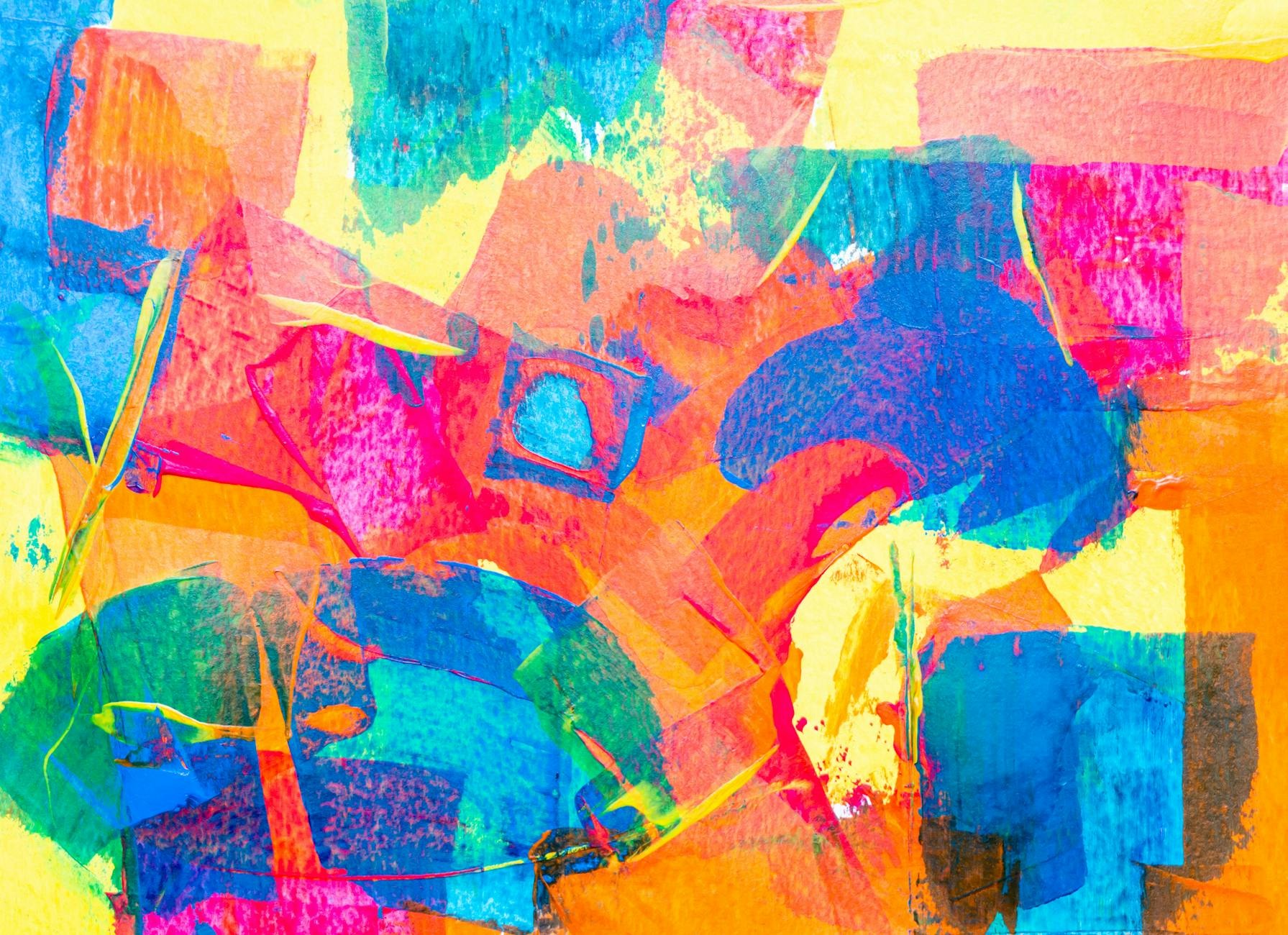
Dali’s Analysis: What’s beneath the surface? Perhaps it’s his exploration of the subconscious—a nod to Freud? Whatever the case, one could argue that his works are the visual equivalents of lucid dreams.
- Factoid: The term ‘Surrealism’ itself, coined by writer Guillaume Apollinaire, predates the movement.
Abstract Expressionism: Bigger, Bolder, and… Drippier?
Imagine a canvas not as a window to another world, but as an arena where artists like Jackson Pollock unleash their inner creative beasts. Abstract Expressionism throws structure to the wind. Literally.
- Technique: Drip painting, colorful chaos, and emotive strokes
- Influence: A post-World War II world seeking new meaning
- Notable Figures: Jackson Pollock, Mark Rothko
The canvas is alive. It breathes, it bleeds, it bears witness to the artist’s innermost struggles—and victories. If this sounds intense, it’s because it is. After all, the point is to feel, not just to see.
How to Approach Abstract Art: A Survival Guide
- Forget Preconceptions: Leave your assumptions at the door.
- Engage with Emotion: How does it make you feel? That’s right—feel.
- Search for Narrative: If there’s a story, it’s yours to discover.
- Talk to the Art: No, really. It’s less embarrassing than you think.
- Enjoy the Mystery: Sometimes confusion is the key to appreciation.
FAQs
Q: Isn’t abstract art just a bunch of random stuff?
A: Not entirely. Though it might look chaotic, there’s often intention behind the madness. Think of it like jazz music—a whirlwind of improvisation yet deeply rooted in theory and skill.
Q: Can I create abstract art?
A: Absolutely! Grab a canvas, some paint, and let your imagination run wild. Remember, there are no mistakes in abstract art—only happy accidents.
Q: Why do some abstract artworks sell for millions?
A: It’s about perception, cultural significance, and sometimes, just a bit of market hype. Art is subjective, value even more so.
The Timelessness of Abstract Art
Whether you love it, hate it, or just don’t quite get it, abstract art continues to captivate and challenge our perceptions. It’s a testament to human creativity and the endless quest to express the inexpressible. In the end, perhaps it’s not about understanding every brushstroke, but rather about embracing the complexity of the world—and our minds. Or maybe it’s just an excuse for artists to spill paint and call it a day. Who can say?
 Lynn Hallierones