
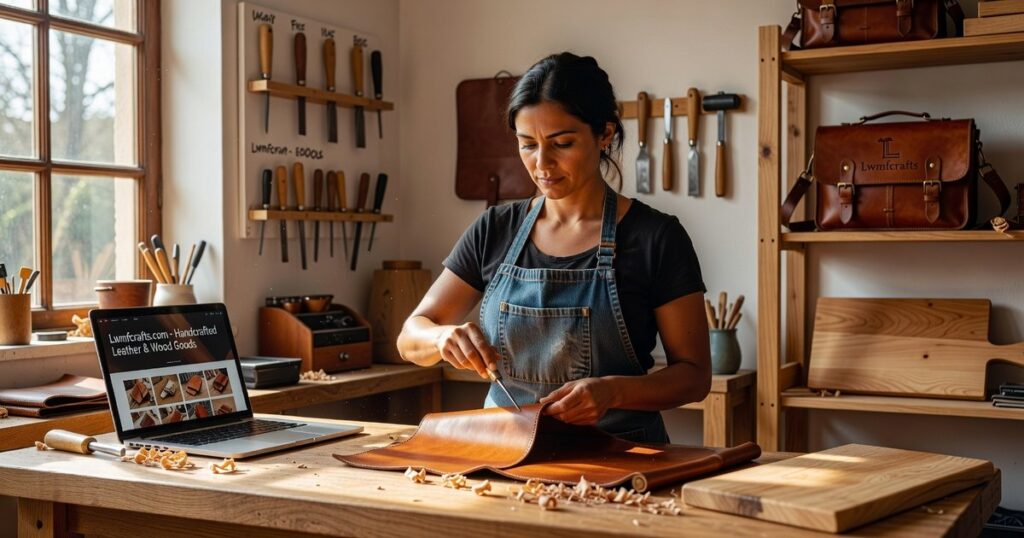
I started making things with my hands because I was tired of buying stuff that felt empty.
You’re probably here because you want to create something real. Something that’s yours. Not another mass-produced item that looks like everyone else’s.
Here’s what I’ve learned: the best projects aren’t the ones that look perfect in photos. They’re the ones that teach you something and leave you wanting to make more.
I built lwmfcrafts to share what actually works. Not the Pinterest-perfect stuff that falls apart when you try it. Real techniques that hold up.
We test every project before it goes up. We work with materials you can find without driving to three different stores. And we focus on crafts that matter because they’re useful or beautiful or both.
You’ll find projects here that match your skill level. Whether you’re just starting or you’ve been crafting for years, there’s something that’ll push you just enough to keep it interesting.
No fluff about finding your inner artist. Just solid ideas and clear instructions that help you make things worth keeping.
The Heart of the Craft: Embracing Artistic Expression
You know what I love about making things by hand?
It’s mine.
Not some factory’s interpretation of what I should want. Not a mass-produced copy that ten thousand other people own. Mine.
When I sit down to work on a project, I’m not just following steps. I’m telling a story. Maybe it’s about the mood I’m in that day or something I saw on my walk through the city. Sometimes it’s just about the way a certain color makes me feel.
That’s what Lwmfcrafts is really about.
Some people say handmade items are too expensive or take too long. They argue you can get the same thing cheaper at a big box store. And sure, if you’re just looking at function, they have a point.
But here’s what they’re missing.
A handmade piece carries something a machine can’t replicate. The slight variation in texture. The way the light hits a surface that’s been shaped by actual hands. Those so-called imperfections? They’re proof someone cared enough to make it real.
I’ve tried different styles over the years. Started with minimalist work because I thought that’s what serious artists did. Then I went through a phase where I couldn’t get enough of bohemian patterns and wild color combinations.
What I learned is this: your style isn’t something you find in a book. It’s something you discover by doing.
Try watercolors. Hate them? Move on to acrylics. Work with fabric. Experiment with wood. The medium doesn’t matter as much as the process of figuring out what speaks to you.
Every project tells a story. The coffee stain on that canvas? Part of the narrative. The spot where your hand slipped? That’s character.
Creative Buzz: Techniques & Trends to Try Now
You know that feeling when you walk into someone’s home and something just catches your eye?
Not because it’s expensive. Because it’s different.
I’m seeing two craft trends right now that give you that exact effect. And both are easier to pull off than you’d think.
Textured Art with Mixed Media
Walk into any design-forward space lately and you’ll spot it. Walls covered in art that practically begs you to touch it.
People are mixing plaster with sand and paint to create pieces that have actual dimension. The surface catches light differently throughout the day. It feels ALIVE in a way flat paintings don’t.
Here’s how you start.
Grab a canvas board and some joint compound from the hardware store. Mix in fine sand if you want grit. Apply it thick with a palette knife. Let it dry overnight.
Then comes the fun part. You can paint over it, scrape into it, or add more layers. The texture does half the work for you.
Some folks say textured art is just a passing fad. That smooth, clean work will always win out.
But I’ve watched this trend grow for three years now. It connects to something deeper. We spend all day staring at flat screens. Our hands crave something real.
Modern Polymer Clay Jewelry
Polymer clay isn’t your middle school art class anymore.
The activities brought to you by lookwhatmomfound lwmfcrafts scene has completely transformed what’s possible with this material.
I’m talking earrings that weigh almost nothing but look like they cost serious money. The secret? Color mixing techniques that create patterns you can’t get any other way.
Try marbling first. Roll two colors together without fully blending them. Slice thin and you get swirls that look like natural stone.
Terrazzo is even better. Mix tiny pieces of contrasting colors into a base. It mimics those speckled floors from fancy hotels (but way more wearable).
The finishing matters though. Sand your pieces smooth with fine grit paper. Buff them until they shine. That’s what separates homemade from handmade.
These trends work because they tap into what people actually want right now. Homes that feel collected, not decorated. Jewelry that starts conversations.
You’re not just following trends. You’re making things that fit how we live today.
Artisan Project Spotlight: DIY Botanical Resin Coasters

I’ll be honest with you.
The first time I tried working with resin, I thought it would be simple. Mix two things together, pour it in a mold, and wait.
I was wrong.
My first batch of coasters came out cloudy with bubbles everywhere. The flowers I’d carefully placed floated to the top. One coaster wasn’t even level. As I reflected on my crafting mishaps, I couldn’t help but think how even the most chaotic beginnings, much like my cloudy coasters, can eventually lead to a polished masterpiece showcased on my …lead to a vibrant and polished final product, much like how a well-curated gaming can transform even a novice player’s experience into something extraordinary.
But here’s what I learned. Once you understand how resin actually works, this project becomes one of the most satisfying things you can make. And the results? They look like something you’d pay serious money for at a boutique.
Let me walk you through how to do this right.
What You’ll Need
Before we get started, grab these supplies:
- Clear epoxy resin (I use a 1:1 ratio type)
- Silicone coaster molds
- Dried flowers and botanicals
- Mixing cups and stir sticks
- Disposable gloves
- Safety glasses
- Isopropyl alcohol in a spray bottle
You can find most of this at any craft store or through lwmfcrafts suppliers online.
Now for the actual process.
Start by prepping your workspace. Cover everything with plastic or wax paper because resin is sticky and permanent. Make sure you’re working on a completely level surface. (Use a level app on your phone if you need to.)
Select your botanicals carefully. Dried flowers work best when they’re fully dried, not just wilted. Flowers with moisture will turn brown in the resin. I usually press mine for at least two weeks between heavy books.
Mix your resin according to the package directions. This part matters more than you think. If the ratio is off, your coasters might never fully cure. Stir slowly for at least three minutes. Scrape the sides and bottom of your cup.
Here’s where most people mess up.
They pour everything at once.
Pour a thin base layer first. Just enough to cover the bottom of your mold. Let it sit for about an hour until it’s tacky. Then arrange your flowers face down on this layer. The tackiness holds them in place.
Pour the remaining resin slowly. Aim for the side of the mold, not directly onto your flowers. This keeps them from shifting around.
You’ll see bubbles. Don’t panic.
Spray the surface lightly with isopropyl alcohol. The bubbles will pop almost instantly. You can also use a heat gun on low, but keep it moving so you don’t scorch the resin.
Let your coasters cure for 24 to 72 hours. I know it’s tempting to check them every hour, but resist. The curing process needs time and stable temperature.
Once they’re fully cured, pop them out of the molds. If they stick, put the mold in the freezer for 15 minutes.
Pro tip: Add a layer of clear acrylic spray to the back of your coasters. It protects surfaces from any rough edges and gives a professional finish.
The color of your botanicals will fade over time if exposed to direct sunlight. Keep that in mind when you’re choosing where to use these.
Some people argue that resin projects are too complicated for beginners. That you should start with something simpler.
But I think that’s selling people short. Yes, there’s a learning curve. But if you follow these steps and take your time, you’ll end up with coasters that look incredible. And once you nail this technique, you can use it for jewelry, paperweights, or whatever else you dream up.
Clever Crafting: Smart Hacks for Your Art Materials
You don’t need to spend a fortune on specialty art supplies.
I learned this the hard way after dropping hundreds on texture mediums and dyes that I could’ve made at home for pennies.
Some crafters will tell you that homemade materials don’t perform as well. That you need professional-grade products to get professional results.
But here’s what they’re missing.
The ingredients in many commercial art supplies? They’re sitting in your kitchen right now.
Three Hacks That Actually Work
Hack 1: DIY Texture Paste
Mix joint compound with acrylic paint. That’s it.
The ratio is about 2 parts compound to 1 part paint. You get a thick paste that holds peaks and creates dimension just like the $15 tubes at the art store.
Want it even grittier? Add baking soda. A tablespoon per cup gives you that rough, sandy finish that works great for abstract pieces.
Hack 2: Natural Dyes from Scraps
Your kitchen waste makes beautiful color.
| Kitchen Scrap | Color Result | Best For |
|---|---|---|
| ————— | ————– | ———- |
| Avocado pits | Soft pink | Cotton fabric |
| Onion skins | Yellow to orange | Yarn and linen |
| Black beans | Blue to purple | Natural fibers |
Simmer the scraps in water for an hour. Strain it. Soak your fabric overnight. The colors come out softer than synthetic dyes but they last (especially if you add a vinegar rinse).
Hack 3: Packaging as Art Base
Glass jars become paint holders or decorative vases. Cardboard boxes turn into organizers with some fabric and glue.
I keep every interesting container that comes through my door. Those plastic clamshells from berries? Perfect for sorting beads and buttons.
At lwmfcrafts we see artists create entire installations from repurposed packaging. The material is free and it keeps waste out of landfills. Engaging in creative projects that transform waste into art not only fosters sustainability but also showcases the inspiring “Activities Brought to You by Lookwhatmomfound Lwmfcrafts,” encouraging artists to rethink materials and make a positive impact on the environment. Engaging in creative projects that transform waste into art not only fosters sustainability but also showcases the inspiring “Activities Brought to You by Lookwhatmomfound Lwmfcrafts,” where artists turn repurposed packaging into stunning installations that keep our environment clean.
Start Your Creative Journey Today
You came here looking for a creative outlet.
Now you have it. Fresh ideas, trending techniques, and a full project guide that actually makes sense.
I know what stops most people. It’s not a lack of talent. It’s the fear that you don’t have the right skills or that inspiration won’t strike when you need it.
That’s exactly why I built lwmfcrafts the way I did.
The projects here are accessible. The hacks are clever. And anyone can start creating beautiful handmade items without feeling overwhelmed.
You don’t need years of experience or a studio full of expensive tools. You just need to begin.
Here’s what you do next: Pick one project or technique from this guide. Gather your materials (most of which you probably already have). Then take that first step.
The joy of making something with your hands is waiting for you. Stop letting doubt keep you on the sidelines.
Your next creative adventure starts now. Fast Crafts Lwmfcrafts. Indoor Activities Lwmfcrafts.
 Zayric Xenvale is the kind of writer who genuinely cannot publish something without checking it twice. Maybe three times. They came to artistic expression styles through years of hands-on work rather than theory, which means the things they writes about — Artistic Expression Styles, Specialty Reads, LWMF Artisan Project Spotlights, among other areas — are things they has actually tested, questioned, and revised opinions on more than once.