

Looking to spark fresh inspiration, master new crafting techniques, or stay ahead of emerging art trends? This article is designed to fuel your creativity with practical insights, innovative project ideas, and hands-on DIY hacks you can start using right away. Whether you’re exploring new artistic expression styles or searching for smarter ways to work with your materials, you’ll find guidance that’s both inspiring and actionable.
We’ve carefully analyzed current crafting trends, tested popular techniques, and gathered proven material hacks to ensure the ideas shared here are not just imaginative—but effective. From spotlighting standout artisan projects to breaking down step-by-step methods, this guide helps you turn inspiration into finished work.
If your goal is to build a consistent daily creative habit, experiment with new styles, or elevate your DIY results, you’re in the right place. Let’s dive into techniques and ideas that make creativity practical, exciting, and uniquely yours.
Start Before You Feel Ready
You don’t have to be “born creative.” That’s a myth. Creativity is a skill, meaning it grows with repetition, not magic. A daily creative habit simply means making something small every day—sketching, journaling, stitching, experimenting.
I won’t pretend there’s one perfect formula. Research suggests habits stick when they’re tiny and consistent (Clear, 2018), but what works for you might differ. Start with ten minutes. Remove friction. Keep tools visible.
Some argue waiting for inspiration preserves quality. Maybe. But practice creates momentum (think Rocky training montage). Pro tip: track streaks, not masterpieces. Progress beats perfection daily.
More Than a Hobby: The Brain-Boosting Benefits of a Daily Creative Ritual
For those looking to infuse their daily creative habit with fresh inspiration, exploring the techniques outlined in our *Beginner’s Guide to Modern Crafting Techniques* can provide a fantastic starting point.
At first glance, sketching in a notebook or experimenting with a new craft might seem like a pleasant way to pass time. However, research shows creative activity can significantly lower cortisol, the body’s primary stress hormone (American Journal of Public Health, 2016). In other words, those quiet moments with paint or paper aren’t indulgent—they’re regulating your nervous system. Many people argue that exercise alone is enough for stress relief. Fair point. Yet creative flow—that focused, almost meditative state where time disappears—activates different neural pathways, offering a distinct calm (and yes, it feels a bit like being “in the zone” in a great sports montage scene).
Moreover, creativity strengthens neuroplasticity, the brain’s ability to reorganize itself by forming new neural connections. That flexibility improves problem-solving far beyond your art table. If you’ve ever solved a work dilemma mid-doodle, you’ve felt this in action.
Just as importantly, creating something tangible releases dopamine, boosting mood and reinforcing motivation (Frontiers in Psychology, 2018). That small win combats burnout, breaking the monotony of daily demands.
So what’s next? Start small. Commit to one daily creative habit—ten minutes counts. Pro tip: schedule it like a meeting. Over time, those minutes compound into sharper thinking, steadier moods, and a renewed sense of agency.
The 15-Minute Rule: Building a Habit That Actually Lasts
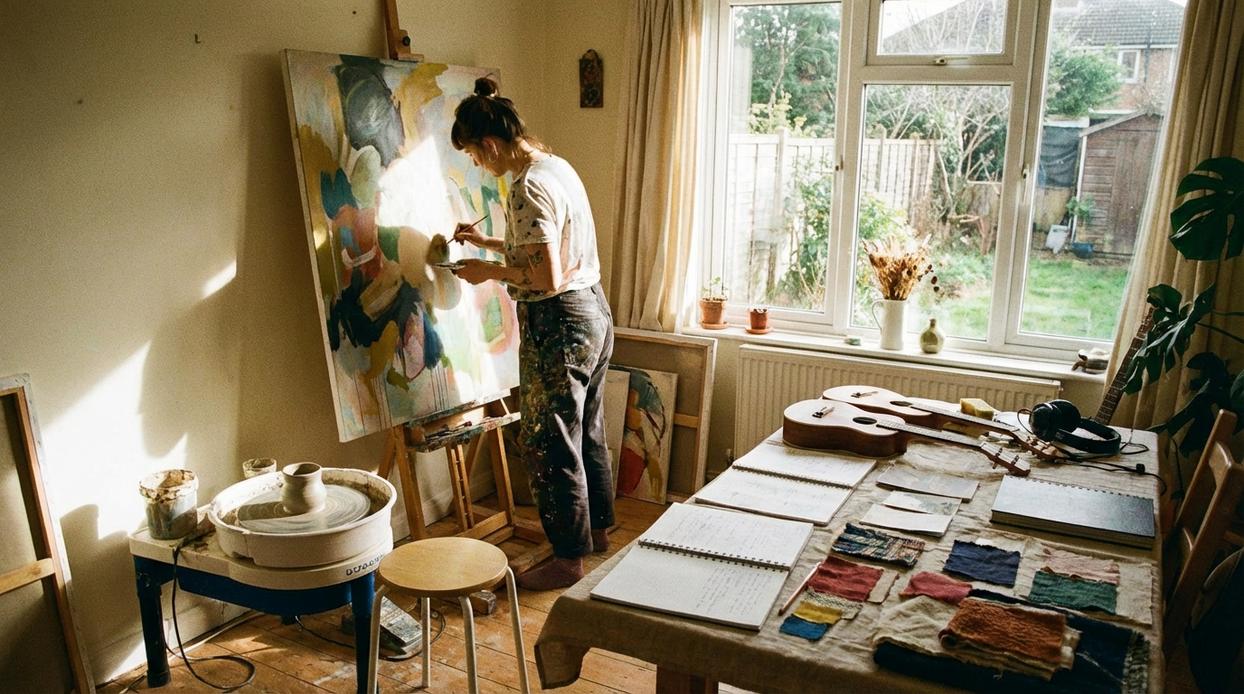
Let’s start with a bold claim: CONSISTENCY BEATS INTENSITY. Every time.
The 15-Minute Rule is simple—commit to just fifteen minutes. That’s it. Behavioral scientists call this “minimum viable effort,” the smallest action that moves you forward while avoiding overwhelm (BJ Fogg, Tiny Habits, 2020). Anyone can find 15 minutes. The magic isn’t in the duration; it’s in repetition. If you’re building a daily creative habit, shrinking the commitment removes the most common excuse: “I don’t have time.”
Some people argue that 15 minutes isn’t enough to improve. They believe real progress requires hour-long deep work sessions. And yes, longer sessions can help—but only if they actually happen. A short session you repeat 5–6 days a week will outperform a heroic two-hour block you skip entirely (we’ve all been there).
Here’s what I recommend:
- Start Impossibly Small. Set a timer for 15 minutes and stop when it rings. Leave yourself wanting more.
- Anchor Your Habit. Use “habit stacking” (a term popularized by James Clear). Attach your creative time to something automatic—right after morning coffee or before checking email.
- Create a Trigger Space. Designate one chair, one desk corner, or one lamp as your “create here” signal. Your brain loves environmental cues.
- Eliminate All Friction. Lay out tools the night before. Sketchbook open. Guitar on stand. Paint uncapped. Make starting almost effortless.
Pro tip: Track streaks visually on a wall calendar. Seeing momentum builds motivation.
If you’re exploring how your background shapes what you create, revisit the role of culture in shaping artistic identity for deeper insight.
Fifteen minutes. Today. Start there.
Your Daily Creative Menu: 10 Ideas You Can Start Today
Creativity doesn’t require a studio, expensive tools, or a free weekend. It just needs a starting point. Think of this as your tasting menu—small, doable bites you can try today.
Mindful Doodling vs. Blackout Poetry
- Mindful doodling is about motion without meaning. You fill a square with lines and patterns, focusing on the pen’s movement (no masterpiece required).
- Blackout poetry is selective destruction. You remove words to reveal a hidden poem.
If you want calm, choose doodling. If you want surprise, choose blackout poetry. One is meditation; the other is excavation.
Color Swatching vs. Five-Minute Photography
- Color swatching explores how pigments blend and clash.
- Photography challenges reframe ordinary objects from unusual angles.
Paint is internal exploration. Photography is external observation. Georgia O’Keeffe stretched color perception; Instagram made us notice our coffee cups (for better or worse).
DIY Material Hack vs. Micro-Crafting
- Mix glue with sand or coffee grounds for textured paste.
- Practice one macramé knot or a single origami fold.
One expands your materials. The other sharpens your precision. Pro tip: test textured paste on scrap paper first—coffee grounds can crack if layered too thick.
One-Sentence Journaling vs. Expressive Writing
- A single sentence captures the day.
- Ten minutes of sensory writing unlocks memory through sound and smell.
Short form builds consistency. Long form builds depth. Both support a daily creative habit without overwhelm.
You don’t need to do all ten. In fact, that’s the counterproductive approach. Pick one. Compare how it feels. Adjust tomorrow. Creativity isn’t about intensity—it’s about return visits (like a café you love but don’t live in).
What to Do When the Blank Page Stares Back
First, bust the inspiration myth. Inspiration isn’t a lightning strike; it’s a muscle built through reps. In other words, action comes first. Start with five messy minutes, and ideas follow (yes, even on Mondays).
Next, curate an Idea Jar. Drop in quotes, color swatches, overheard dialogue, or magazine clippings. When you’re stuck, pull one and respond. The feature is simple; the benefit is instant momentum.
Finally, focus on process, not perfection. A daily creative habit trains consistency over applause. Pro tip: set a timer and stop mid-sentence so tomorrow feels easier.
Your journey starts now. You already have the tools—the why, how, and what—so the only thing left is action. Yes, life is busy, and doubt whispers that you’re not creative enough. However, research shows that consistent creative practice improves mood, memory, and problem-solving skills (American Psychological Association). In other words, this isn’t fluff; it’s brain fuel.
By committing to a daily creative habit, even just 15 minutes, you gain sharper focus, lower stress, and a deeper sense of accomplishment. So pick one activity today and begin. Small steps compound quickly—like interest for your imagination. Benefits build faster than you think.
Keep Creating, Keep Growing
You came here looking for fresh inspiration, practical techniques, and ways to elevate your creative process—and now you have the tools to do exactly that. From smart material hacks to emerging crafting trends, you’re better equipped to turn ideas into art that feels uniquely yours.
The biggest frustration for most creatives isn’t lack of talent—it’s inconsistency, creative blocks, and unfinished projects. That’s why building a daily creative habit matters so much. Small, consistent action is what transforms scattered inspiration into real artistic growth.
Now it’s your move.
Choose one technique you discovered today and put it into practice within the next 24 hours. Experiment. Refine. Share your progress. Momentum builds confidence, and confidence fuels better work.
If you’re ready to level up your craft, explore more project spotlights, try a new material hack, and immerse yourself in fresh creative buzz. Join thousands of makers who are sharpening their skills and turning passion into polished art.
Start your next project today—and let your creativity lead the way.
 Zayric Xenvale is the kind of writer who genuinely cannot publish something without checking it twice. Maybe three times. They came to artistic expression styles through years of hands-on work rather than theory, which means the things they writes about — Artistic Expression Styles, Specialty Reads, LWMF Artisan Project Spotlights, among other areas — are things they has actually tested, questioned, and revised opinions on more than once.